Passing on Know-how: Expertise in Seal Restoration
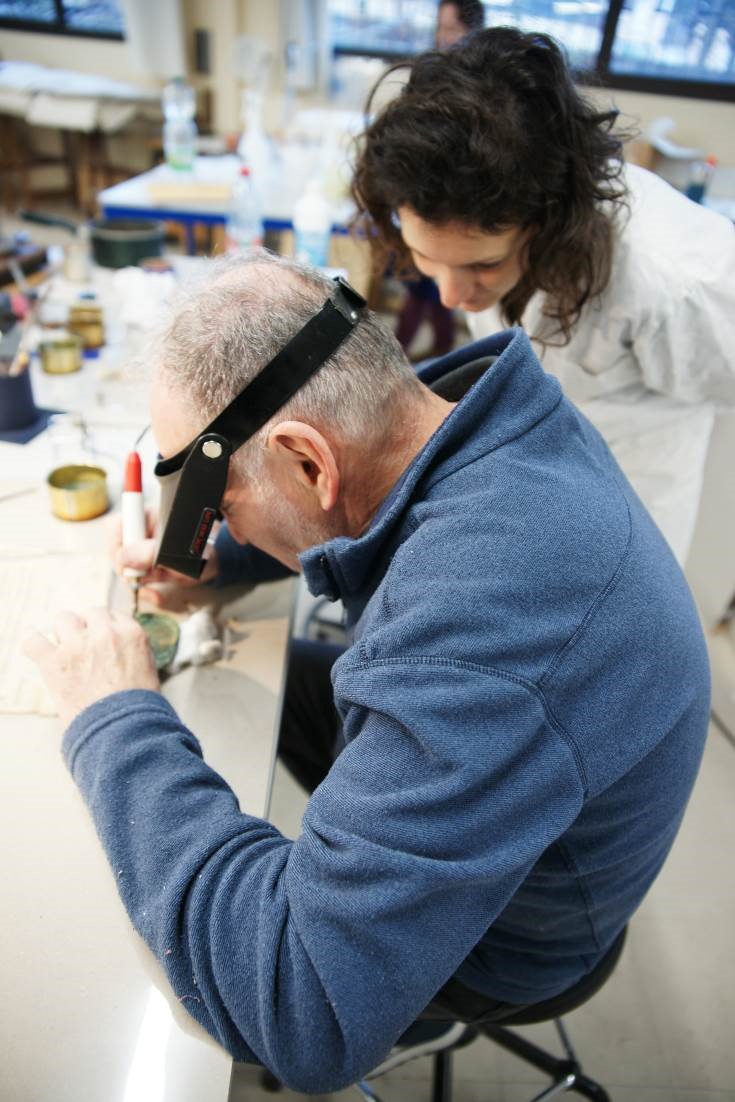
In this context, an internal training session was organized before the retirement of one of our team members, focusing on the restoration and casting of seals from all eras.
We invite you to discover this expertise and how it is shared within the restoration workshop.
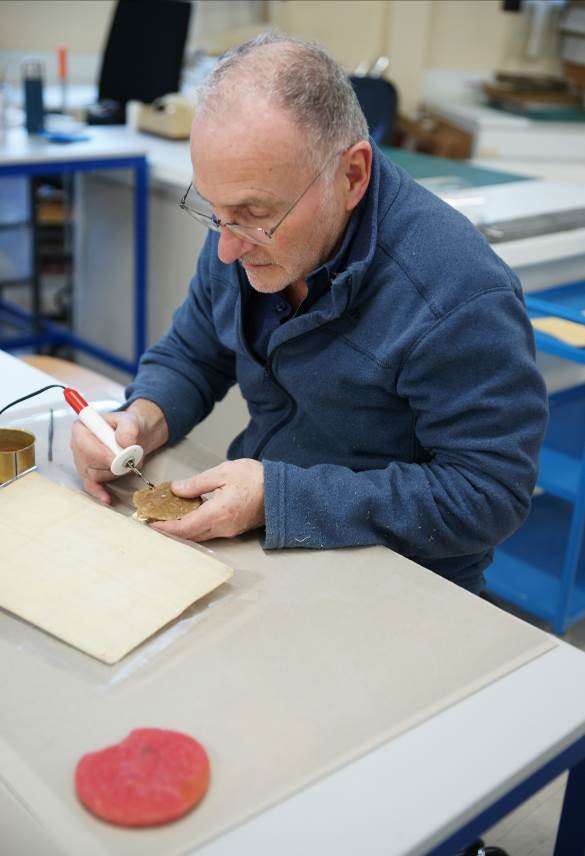
Preparation for plaster casting
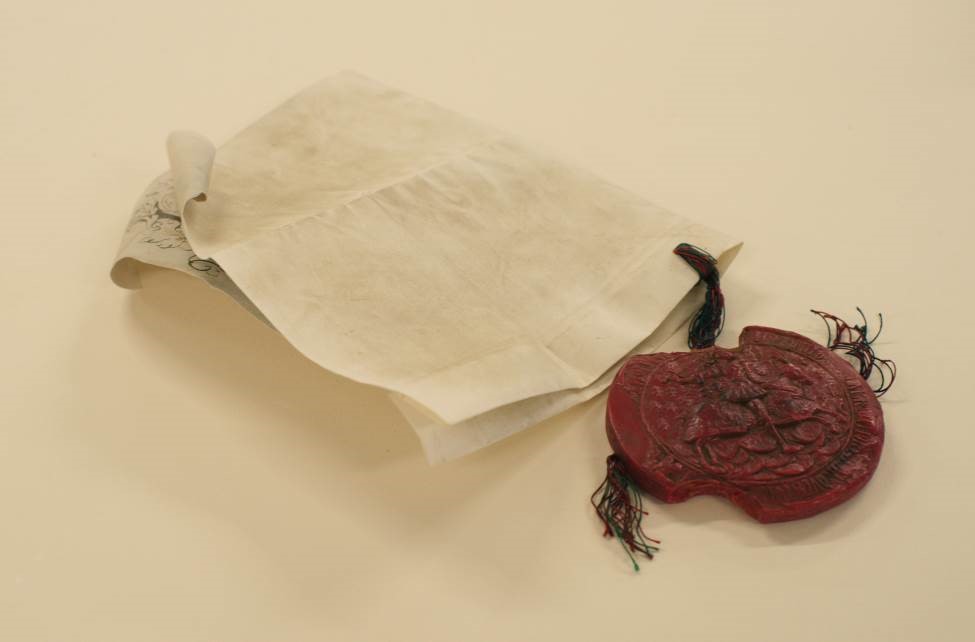
Seals have been used for a very long time, dating back to the origins of history. The seal is both a work of art and a documentary source, the study of which is called sigillography.
A demanding restoration project
As with any ancient document, the first stage of the restorer’s work is a meticulous analysis: material, color, shape, relief, state of conservation (cracks, fragments, lacunas, “diseased”, flaking or crumbling wax, etc.).
The seal is then gently and carefully cleaned, either dry or with distilled water, depending on its condition.
If the seal consists multiple fragments, it can be reassembled using various techniques, either cold or hot, using a mixture of microcrystalline wax and paraffin. If the seal has lacunas, these are filled with the same mixture.
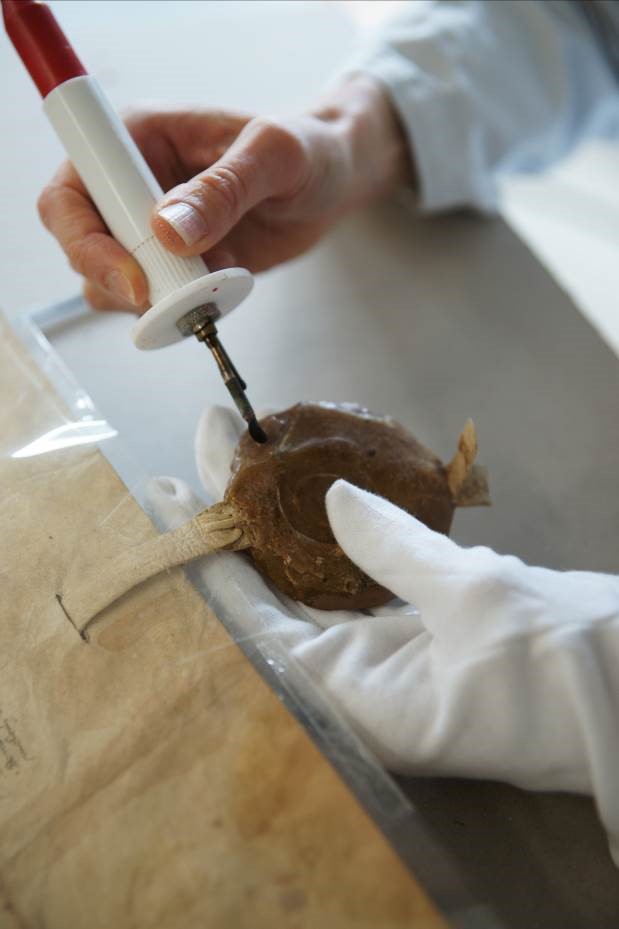
- the hardness of the fillings must be less than that of the original seal (the restoration must yield without causing further breakage of the seal)
- the melting temperature of the mixture must be lower than that of the original
- the original fragments must not be degraded (no “remelting” of the original wax)
- the intervention must be reversible (removal of the added mixture without loss of the original wax)
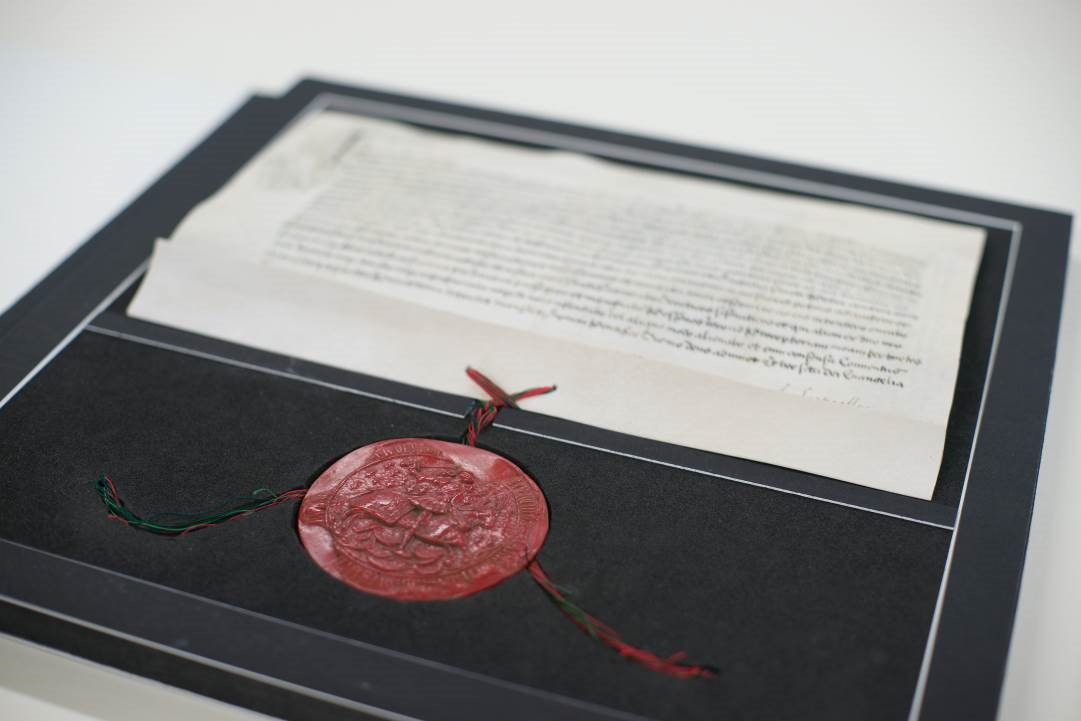
The cast: for study and enhancement
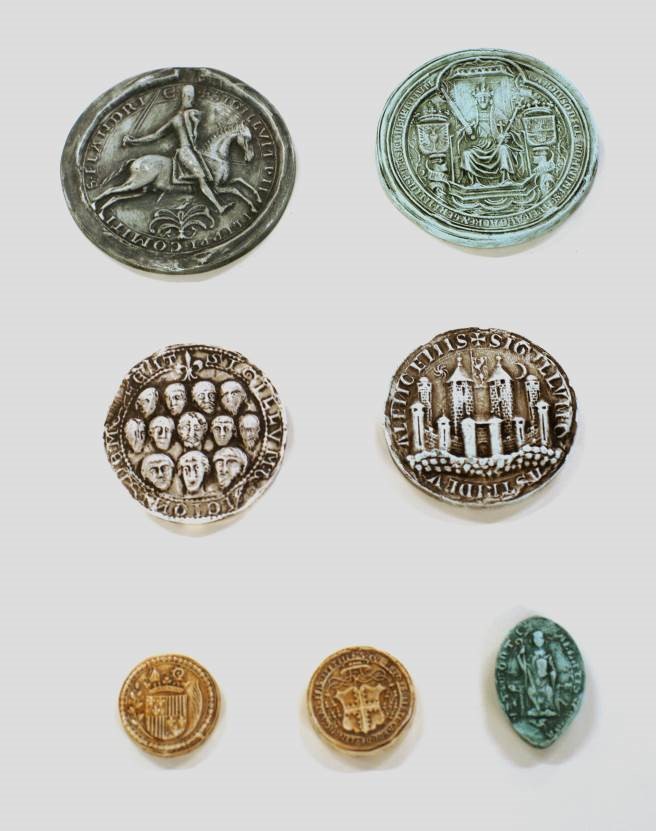
Large collections have been built up in this way, notably in the National Archives of France. Casting is also a valuable tool for the educational departments of archives and museums. The cast must be made from a restored seal.
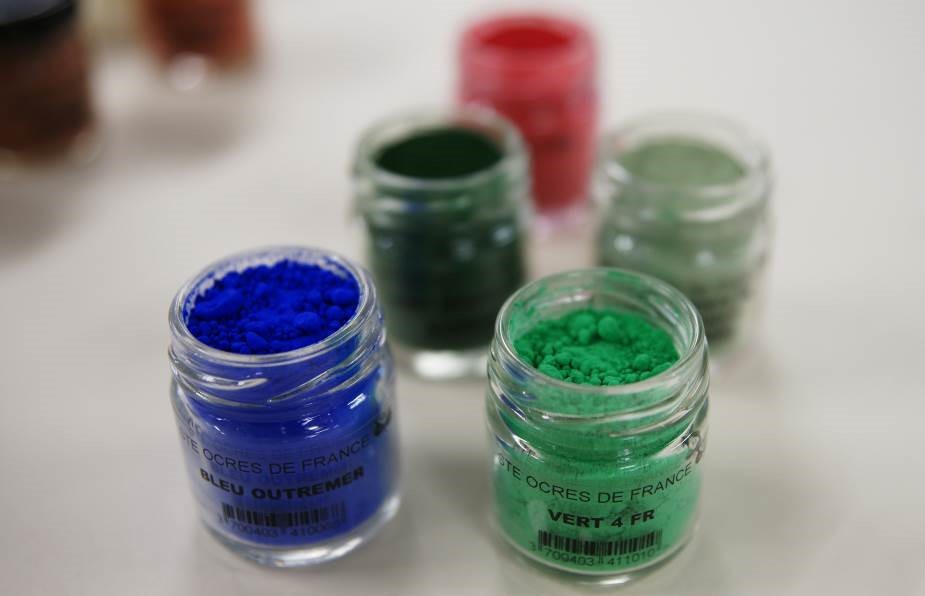
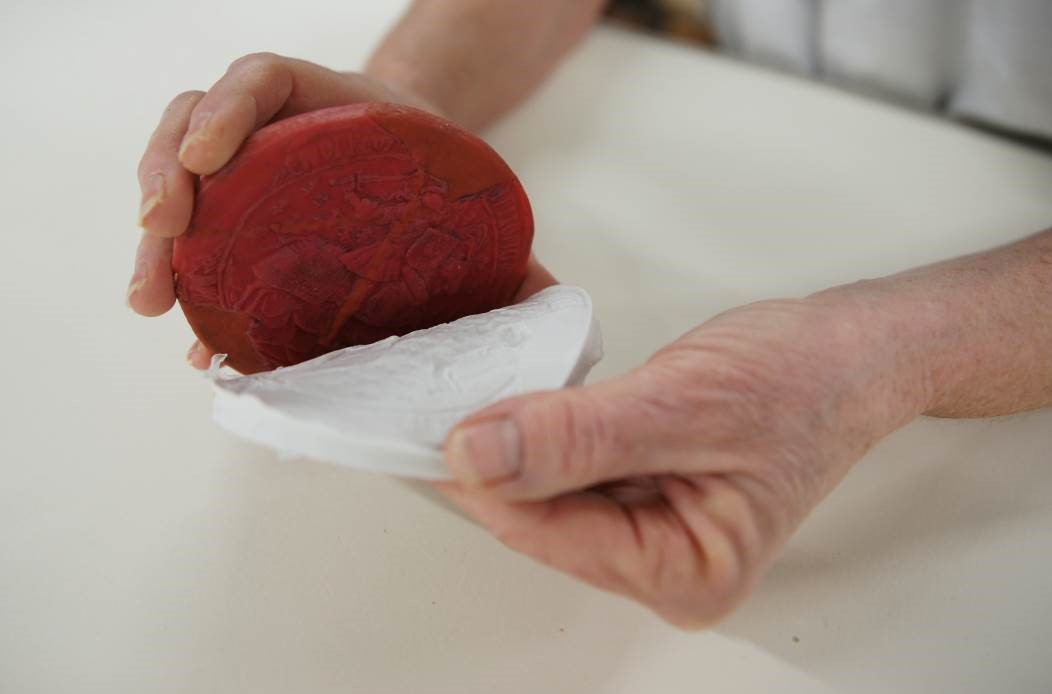
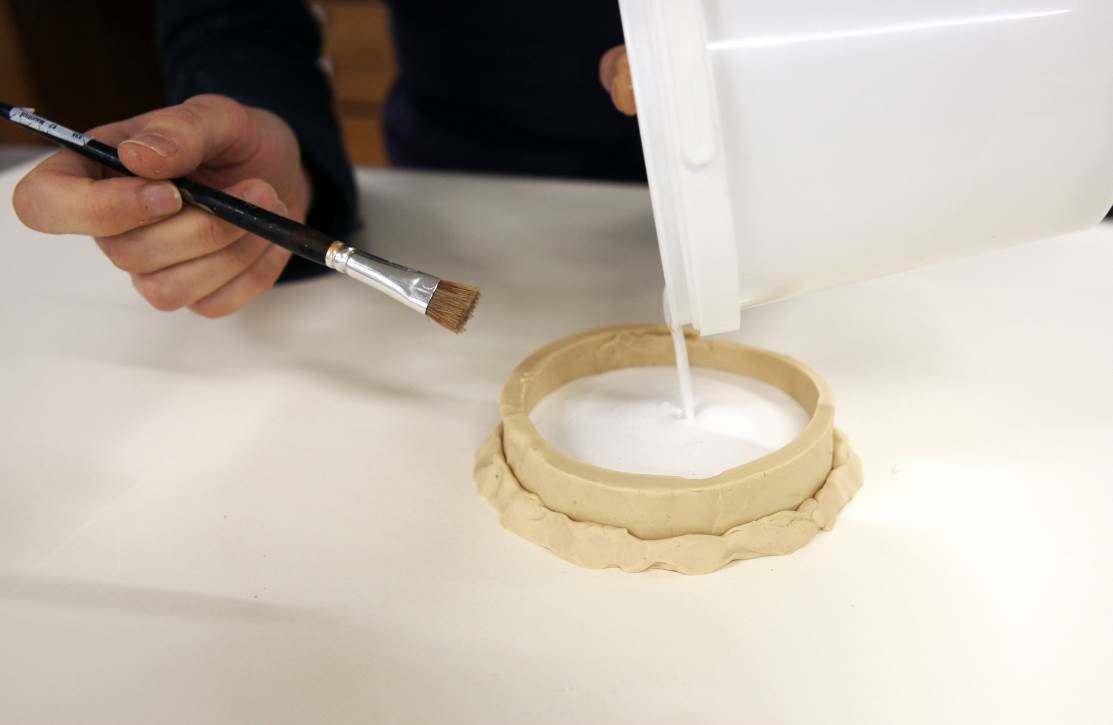
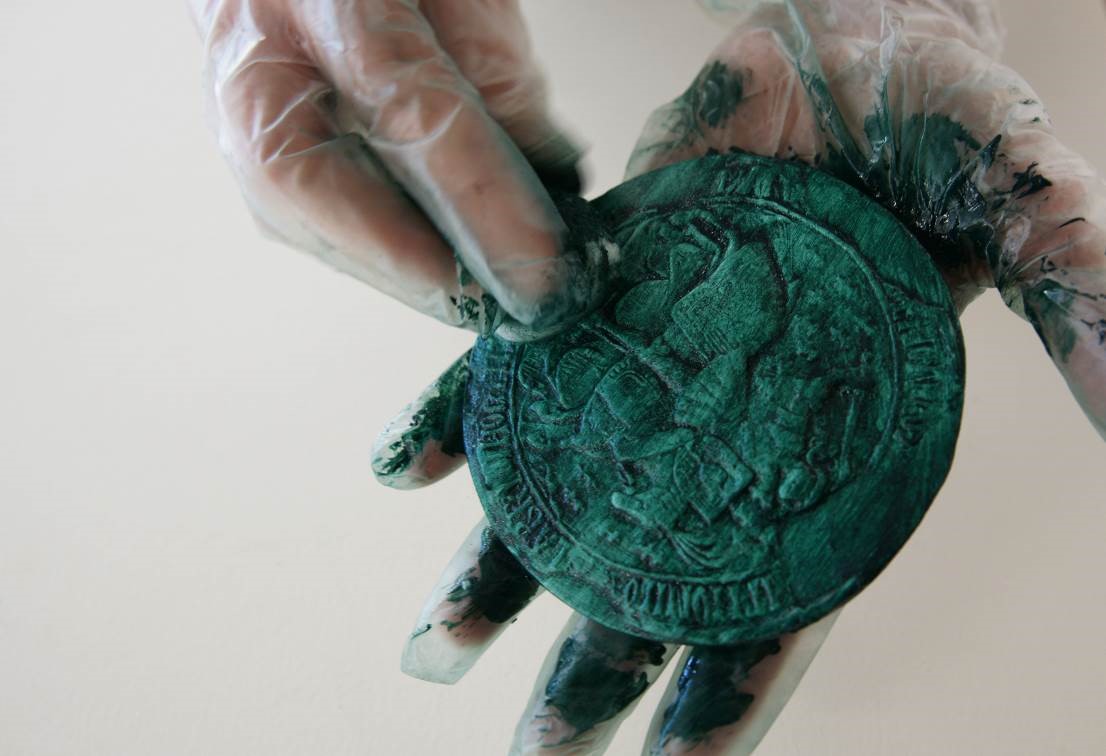
The casting process involves multiple stages, beginning with the taking of an impression of the original seal. This is followed by the removal of the mold and a subsequent check. The preparation and application of plaster to the mold is then carried out. The cast is removed from the mold, and the sanding and checking process begins. Finally, a base tint and contrasting patina are applied to bring out the details of the engraving.
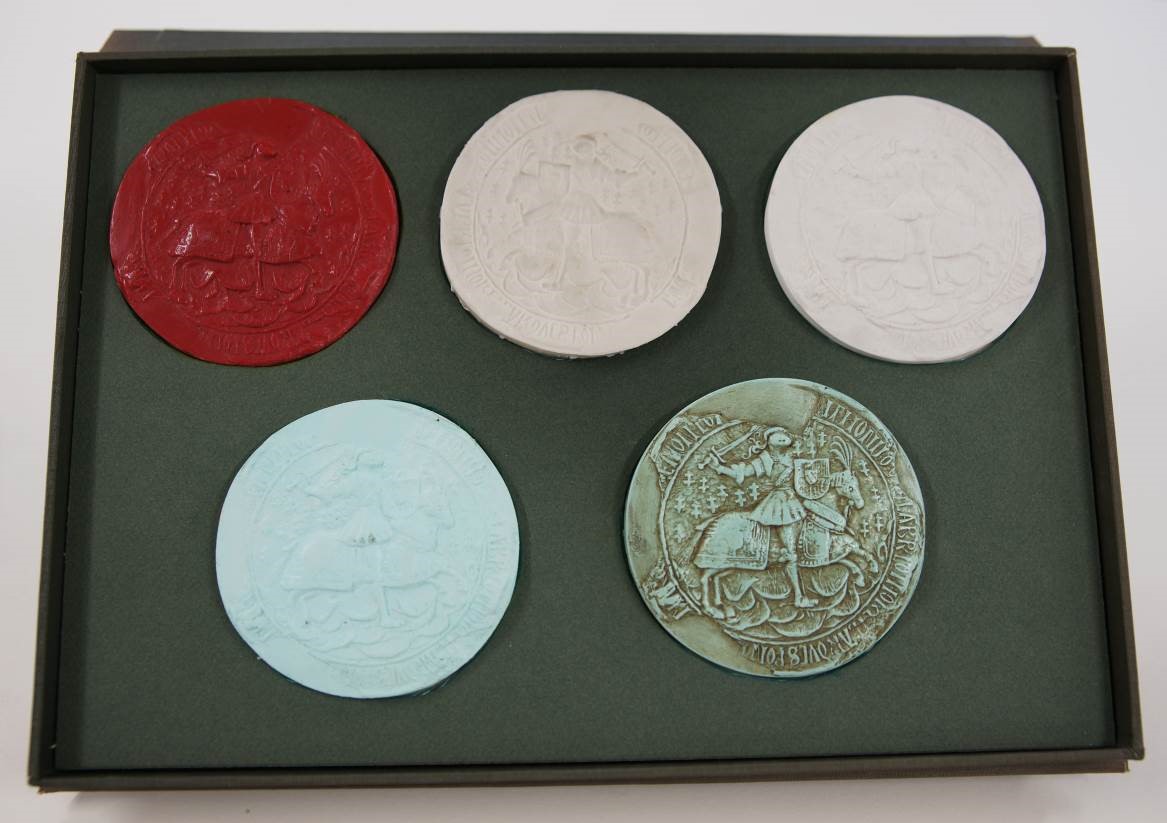
The Transmission of Expertise and Know-How in Restoration
La Reliure du Limousin employs experienced professionals who have been restoring and binding all types of documents for many years, as well as young apprentices, thanks to the recent establishment of an Apprentice Training Center.
This strong desire to share and pass on knowledge is illustrated here by the setting up of specific training, with the aim of preserving unique skills and high standards within the workshop.
We would like to thank warmly Pascal, who has played an active role in the development of the restoration workshop over many years, and whose curiosity has helped to enrich our know-how and preserve it by passing it on, enabling us to respond to our customers’ requests with passion and high standards.