
An incunabulum from the Abbey of Solesmes preserved and showcased by the craftspersons of La Reliure du Limousin.
Condition report of the work
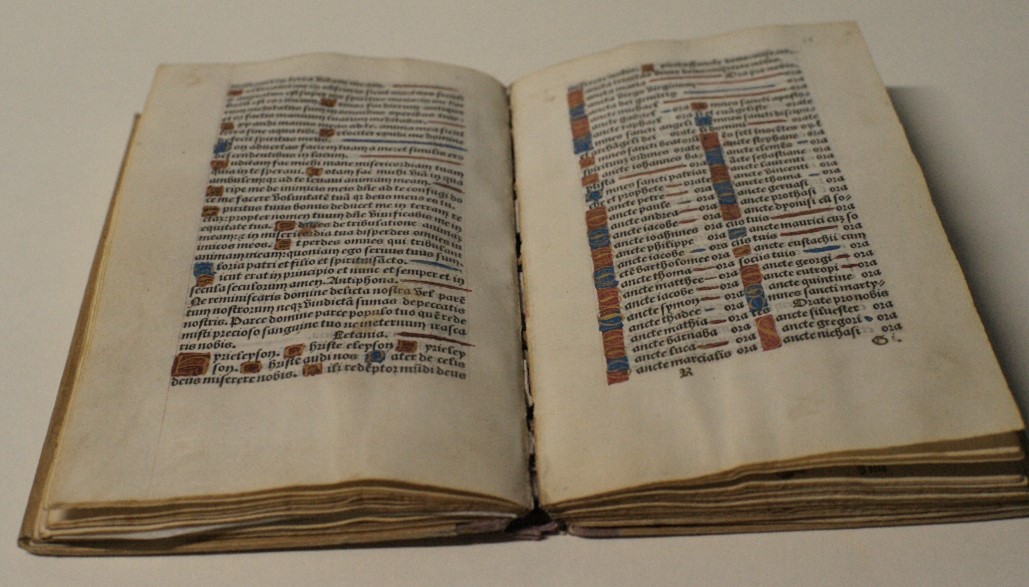
1/ Non-original binding in full paper over boards with five raised bands on the spine.
Spine detached from boards.
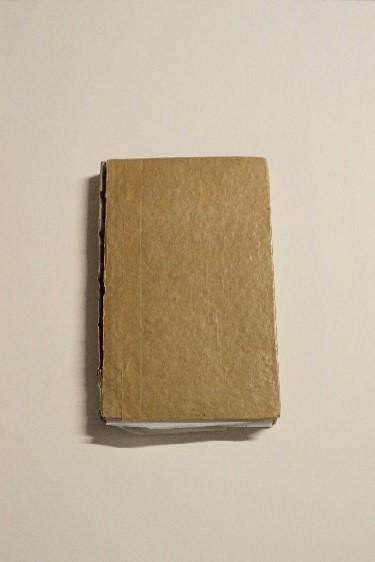
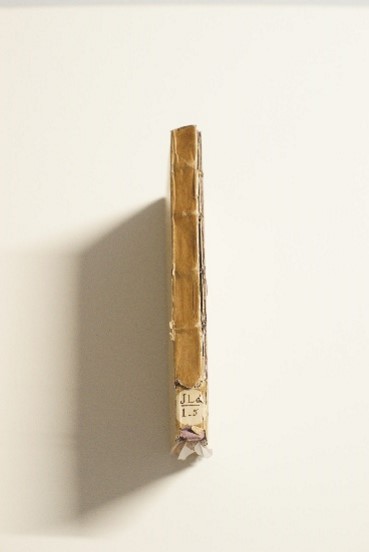
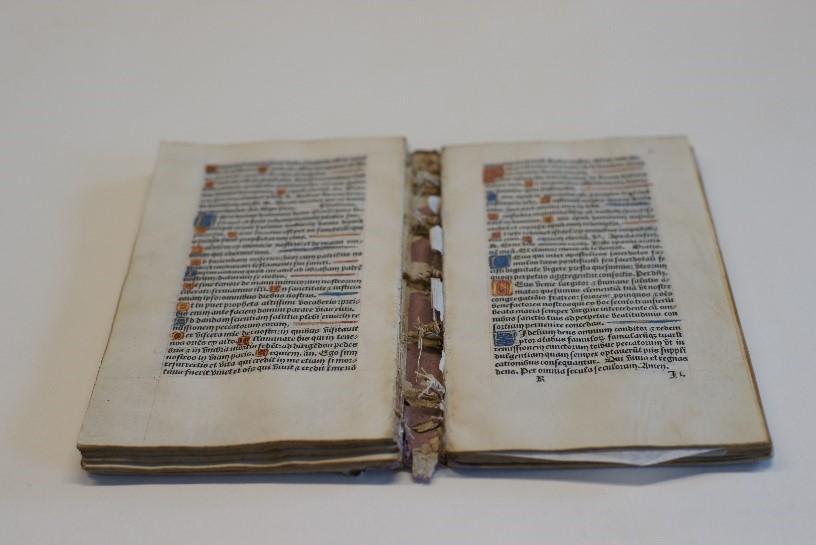
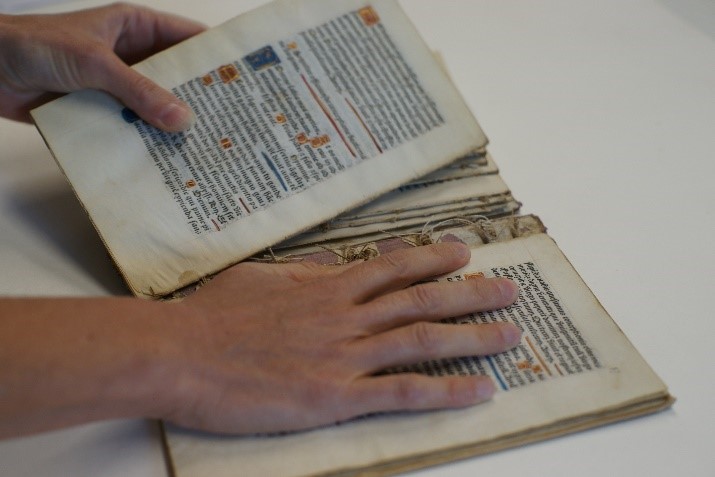
2/ Herringbone seams on double leather bands. The sewing supports are broken.
A remnant of thread indicates the presence of headbands.
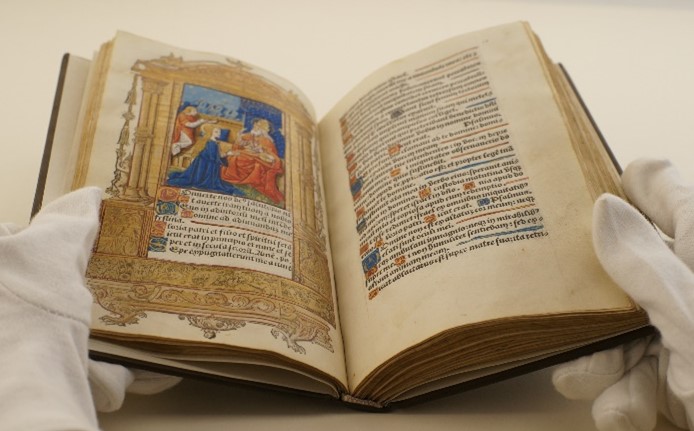
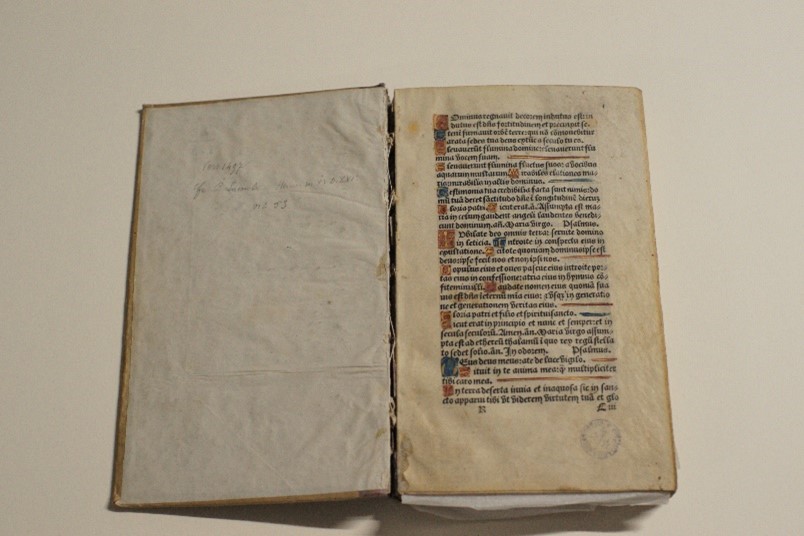
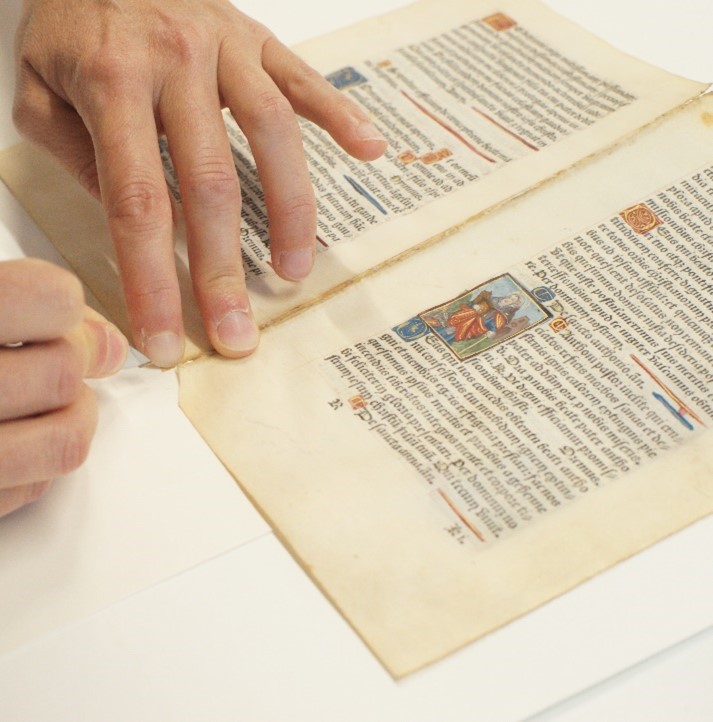
3/ The bookblock consists of printed parchment leaves illustrated with illuminations.
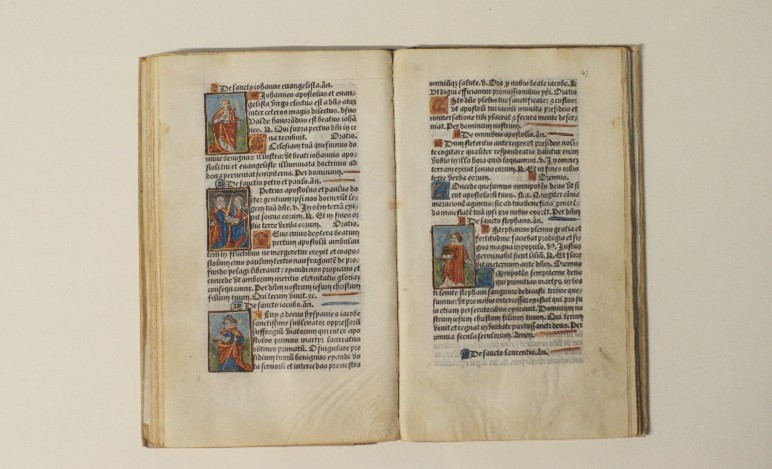
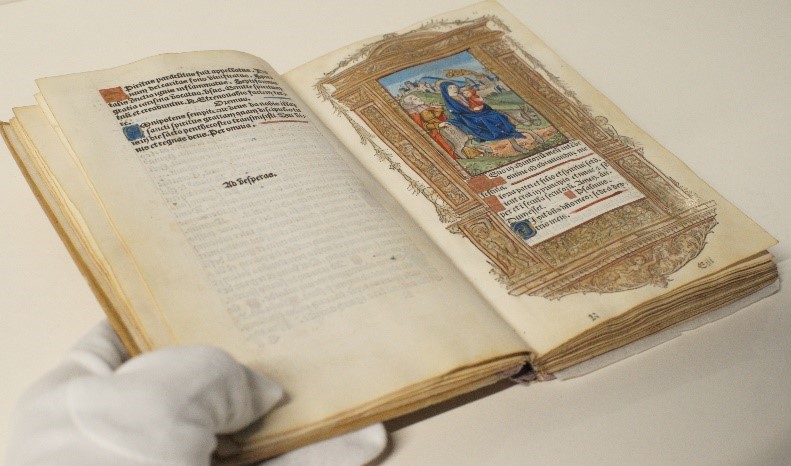

10 signatures, 68 folios numbered in ink at the head edge.
4/ Alterations:
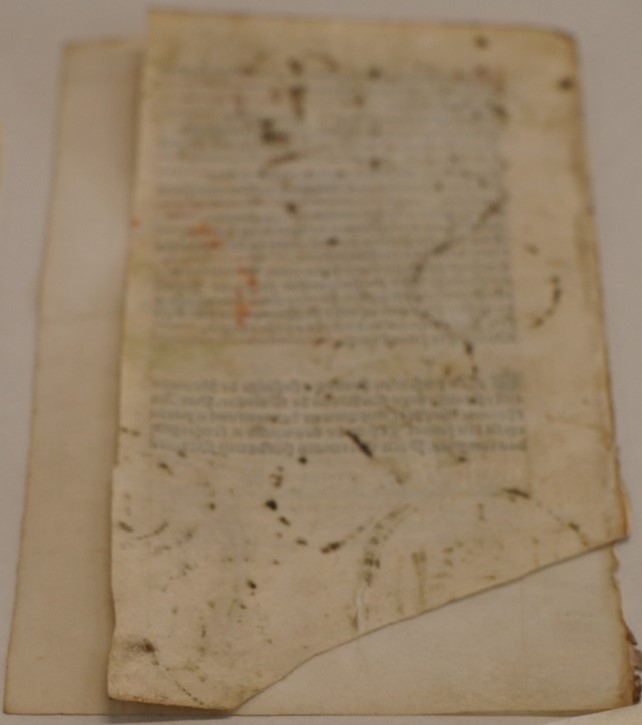
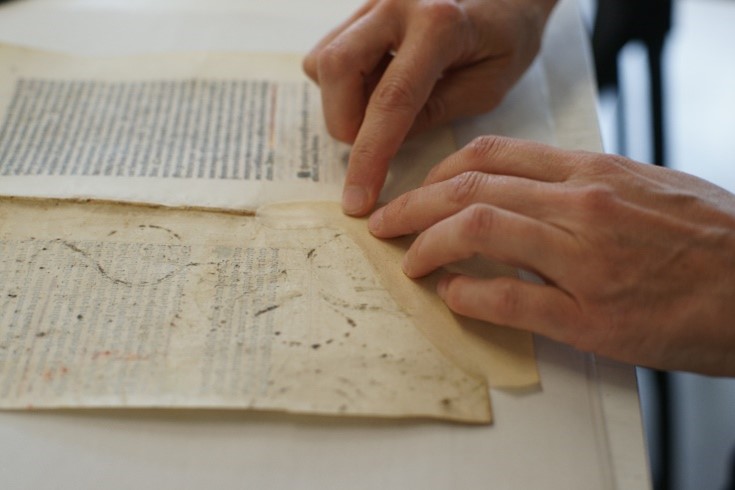
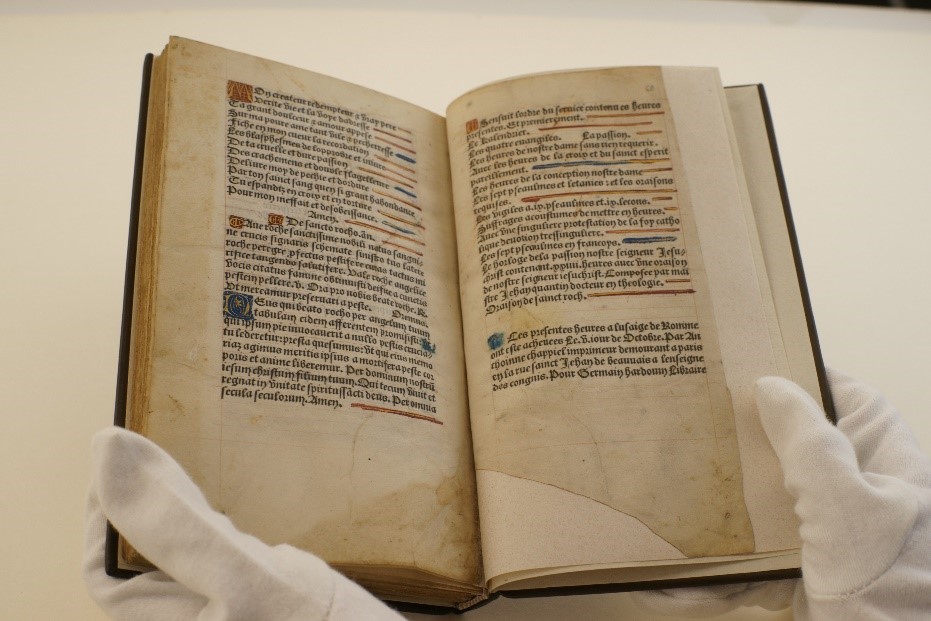
We note light soiling along the edges, shearing of the gutters, a few tears and gaps on folios 49 and 68.
Operations carried out
1/ Pulling
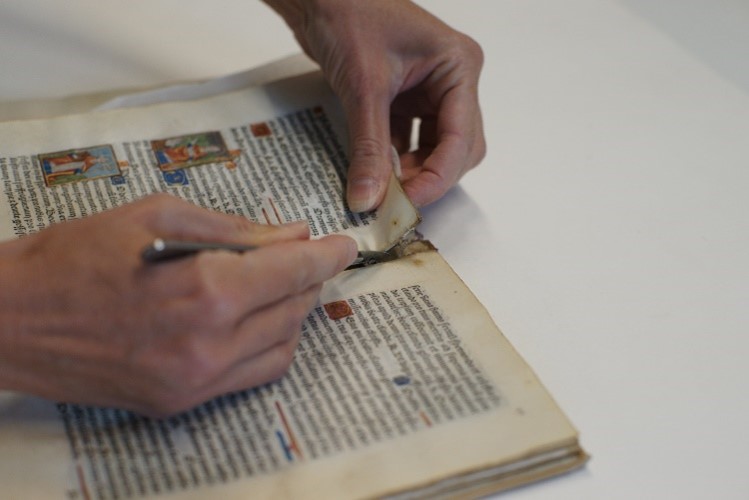
A careful pulling was carried out manually. The stitching threads have been cut to release the signatures from the stitching supports.
2/ Dry cleaning
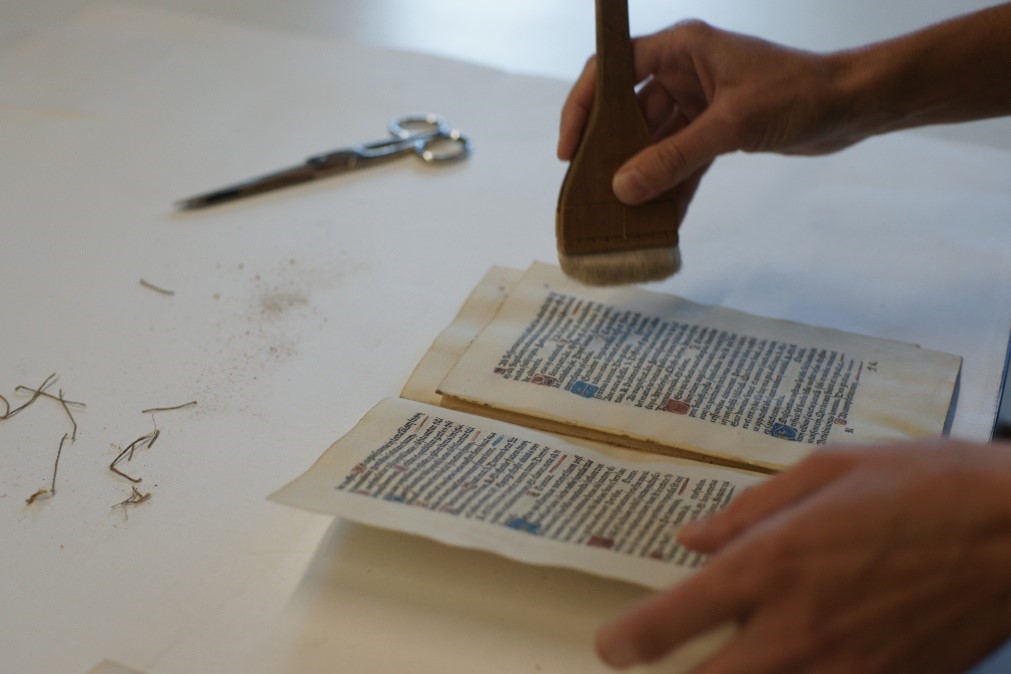
A dry cleaning was carried out by dusting the leaves with a Chinese brush.
All traces of primer glue have been removed.
3/ Restoration of the parchments
The parchment leaves were flattened after being passed through a humidification chamber.
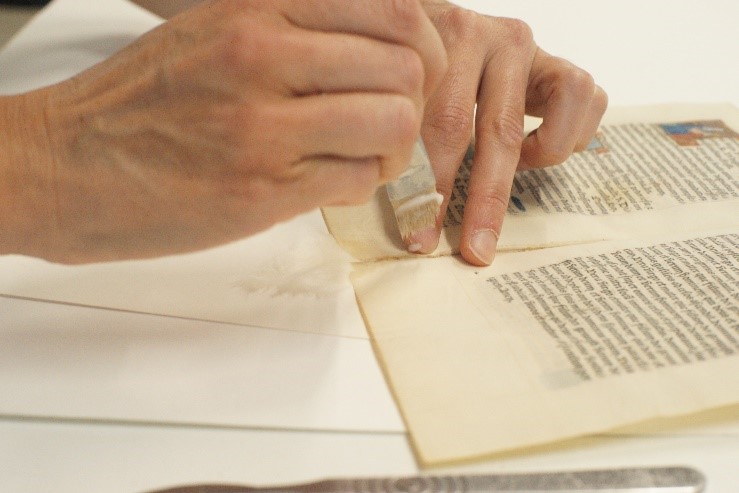
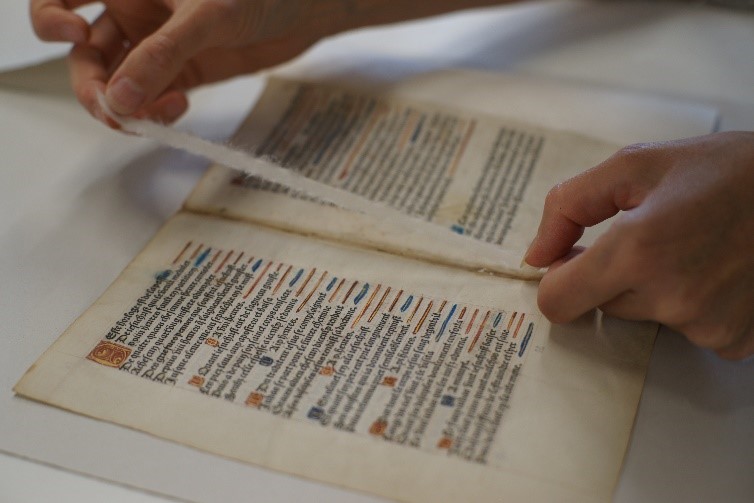
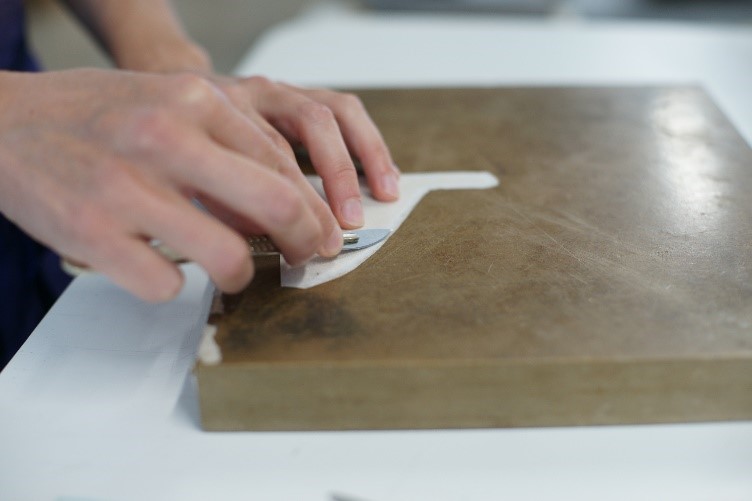
Most of the restoration work focused on consolidating the tears and gutters with 19 gsm Japanese paper and filling in the gaps with thinned parchment which was skived at the edges and Japanese paper. Glue used: wheat starch glue was chosen for the reversibility of the restoration operations.
4/ Heritage Digitization
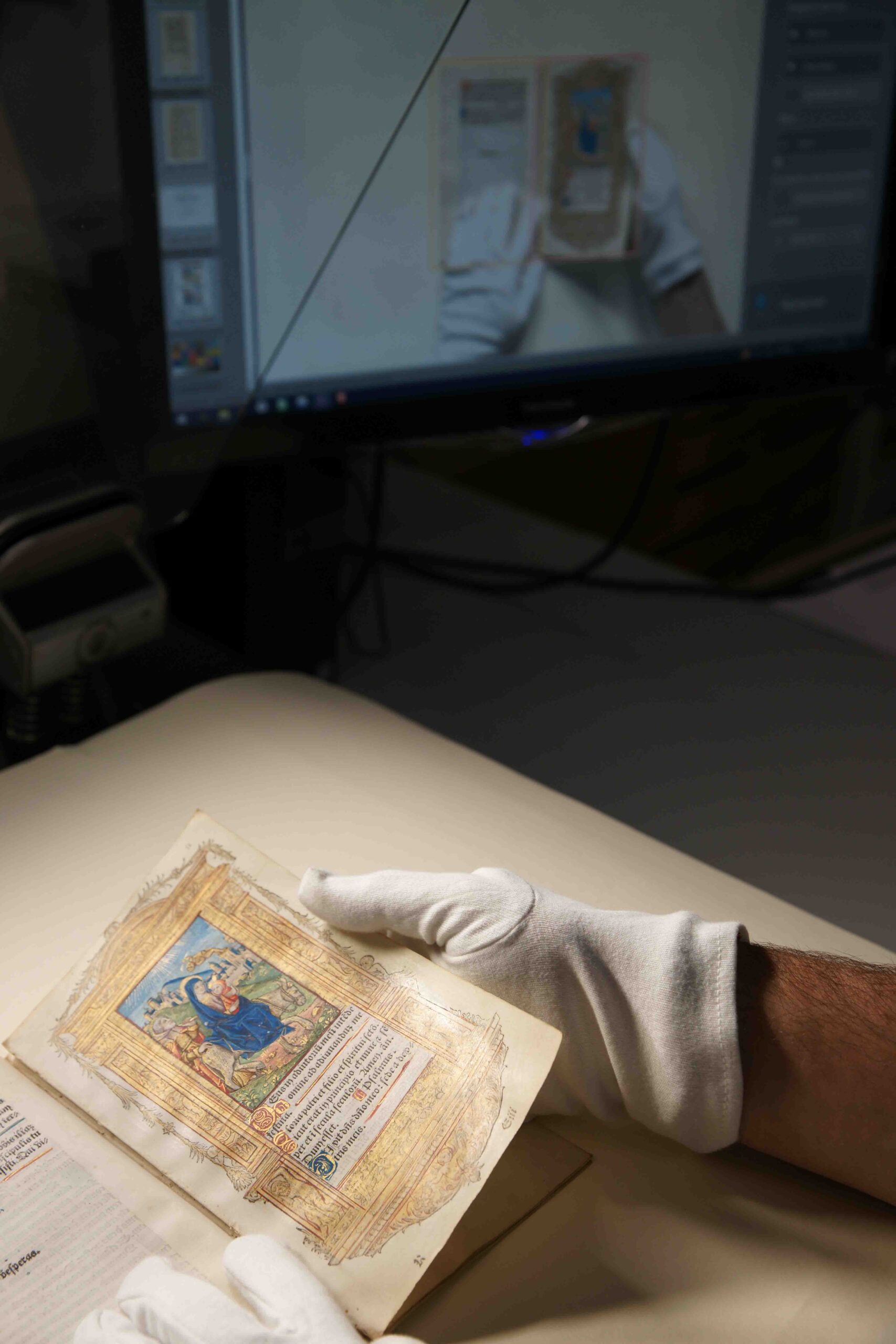
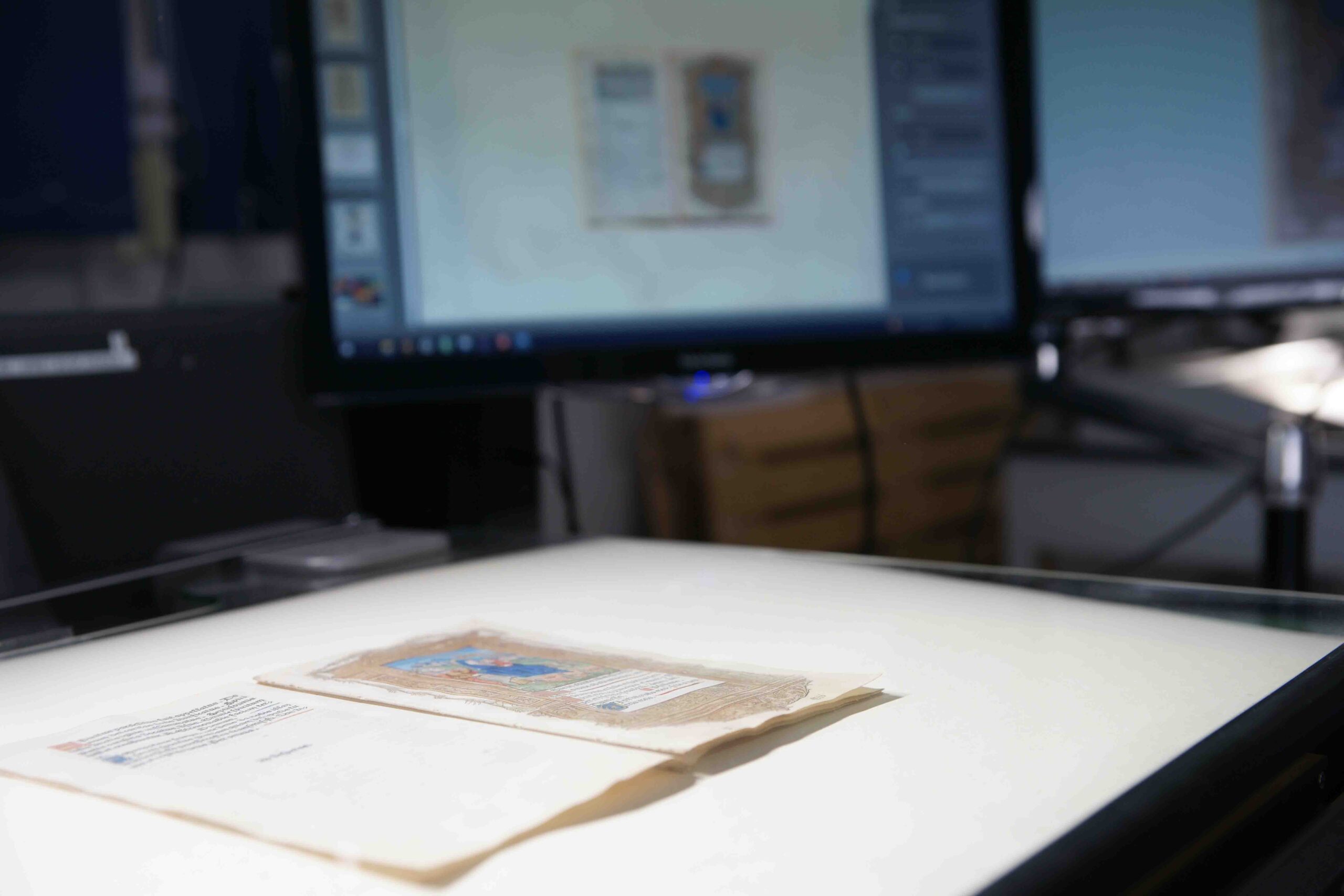
The book of hours was then scanned flat at 600 dpi using a heritage scanner. The digitization is carried out before the sewing and binding operations, to achieve a 180° opening and images of perfect quality.
5/ Sewing
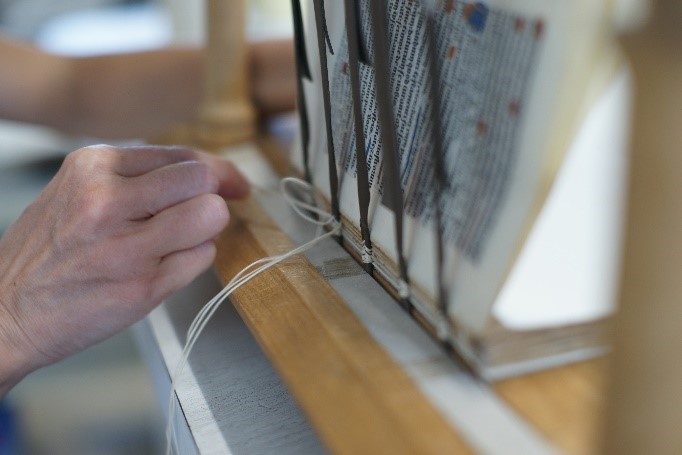
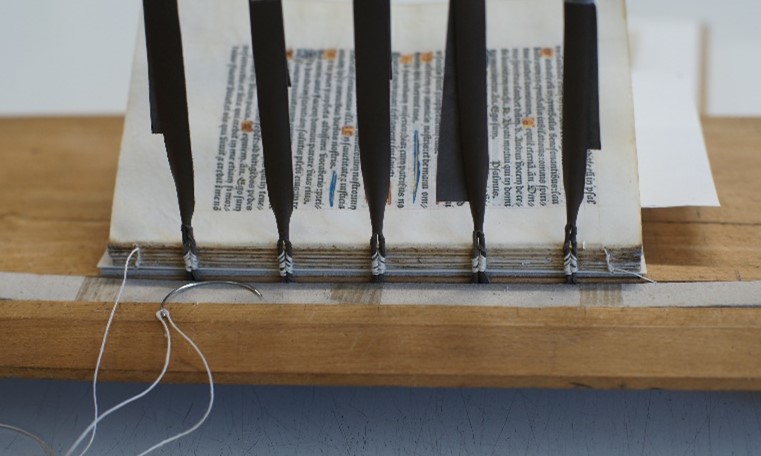
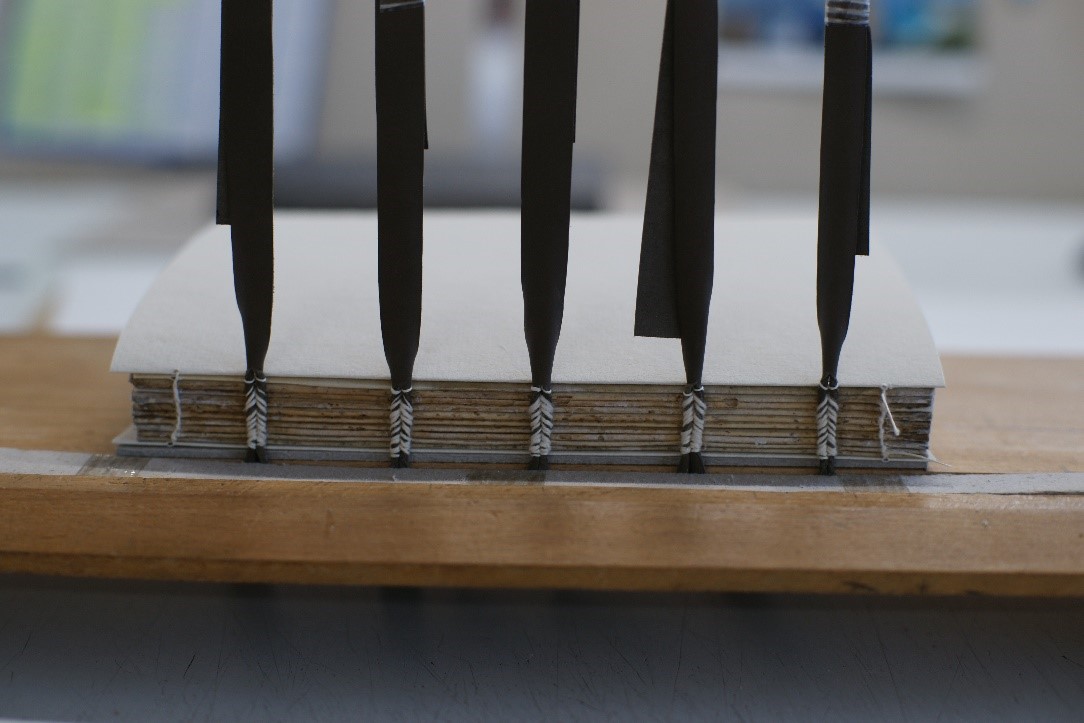
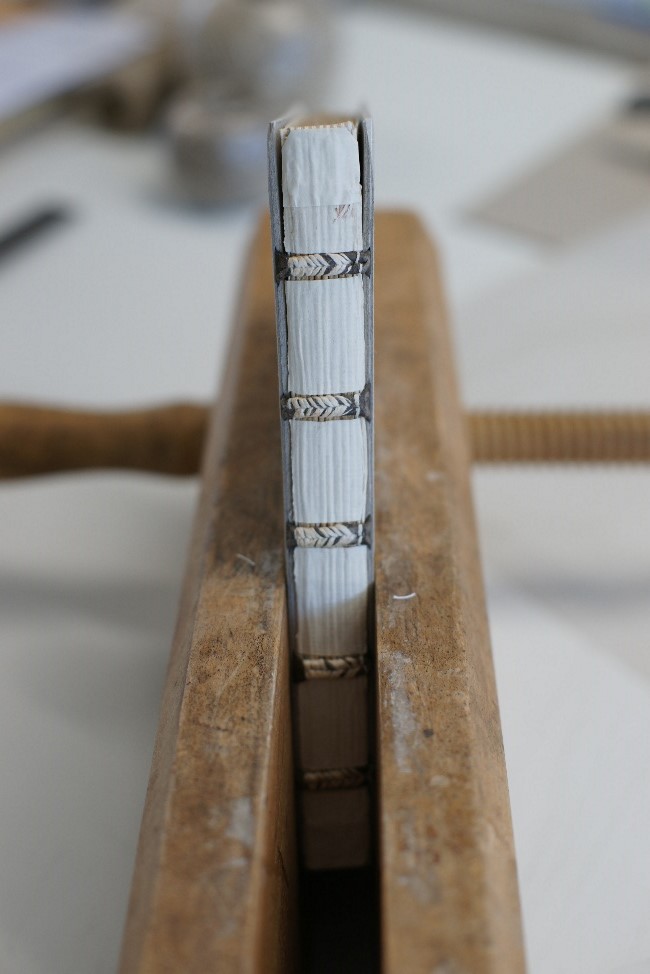
We used linen thread to sew a herringbone pattern onto five double calfskin bands, split and rolled as if they were identical.
6/ Headbands
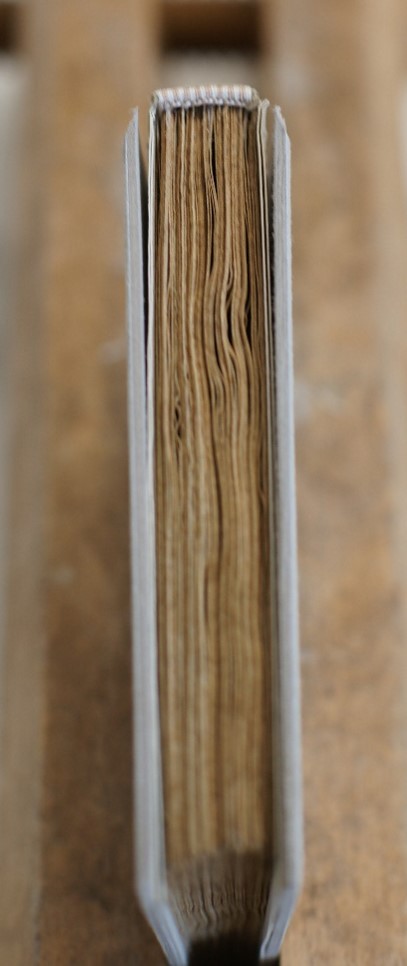
A two-tone pekiné headband was crafted with silk thread.
The headbands were designed to consolidate the covers while providing an aesthetic appearance.
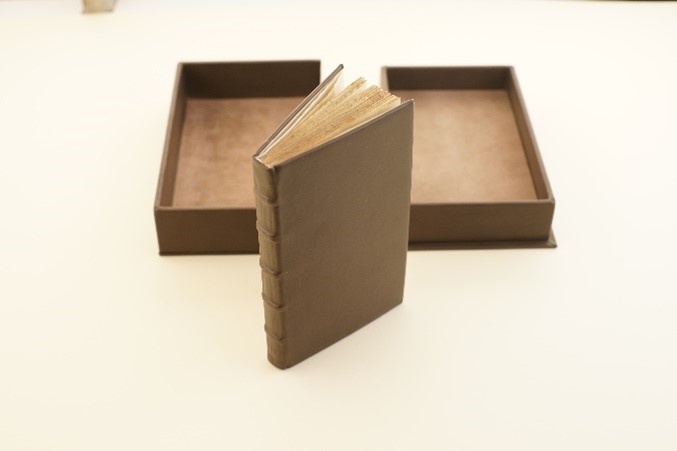
7/ New binding in brown calfskin
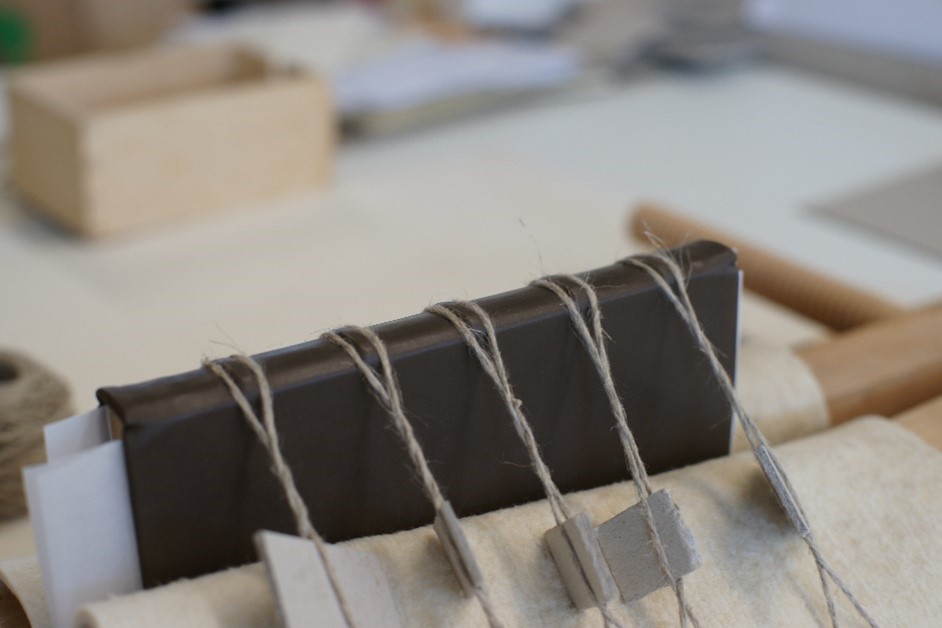
After round backing, the binding was primed using 43 gsm Kozo Japanese paper coated with starch glue. The refined sewing supports were laced into the boards.
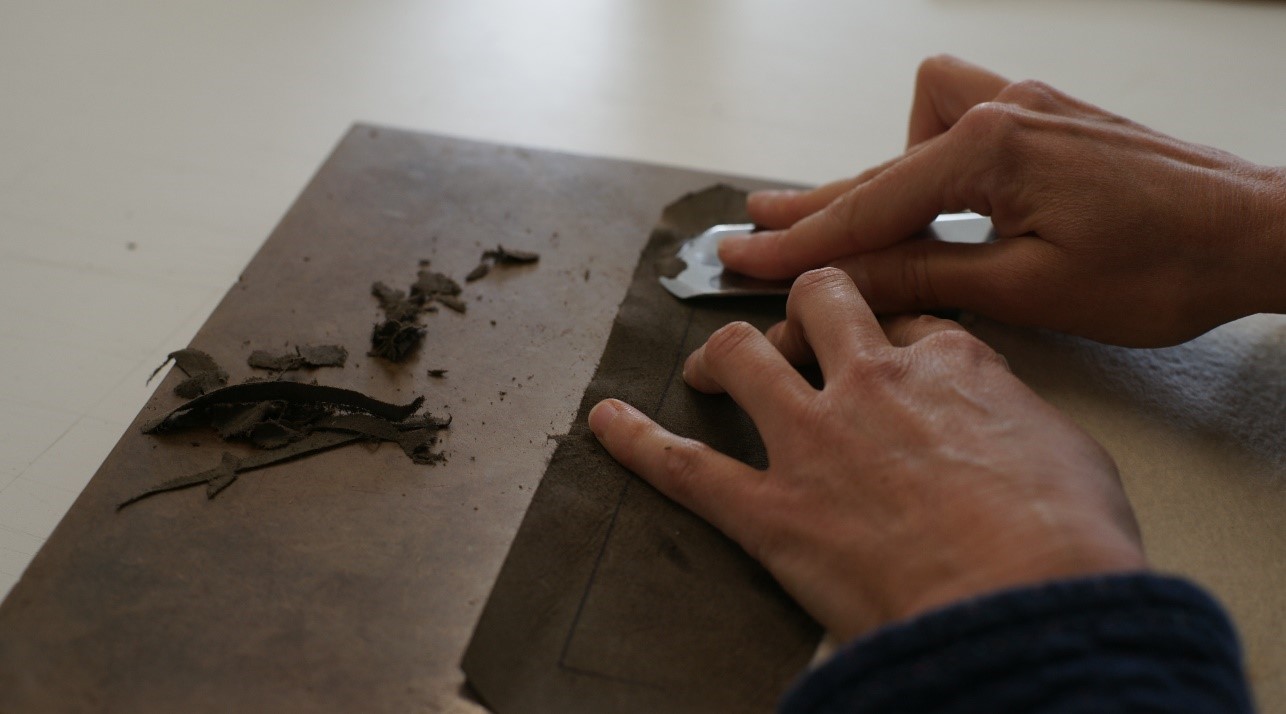
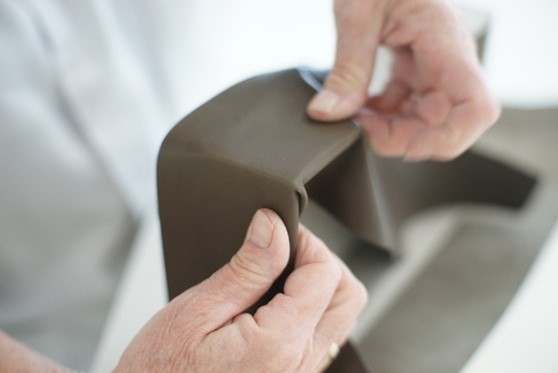
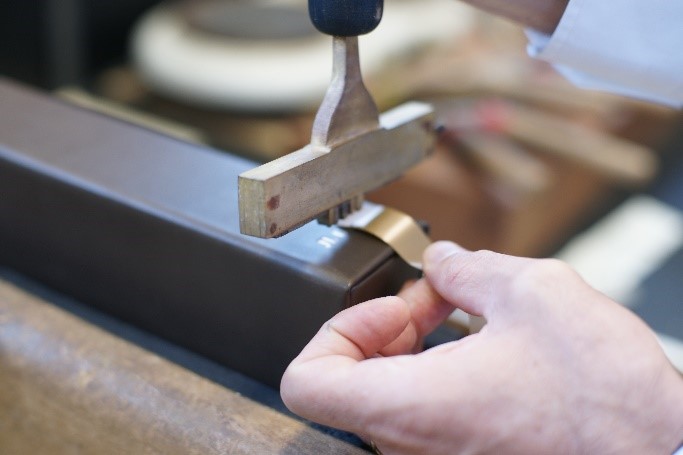
Shaping and softening the leather before binding.
8/ Box
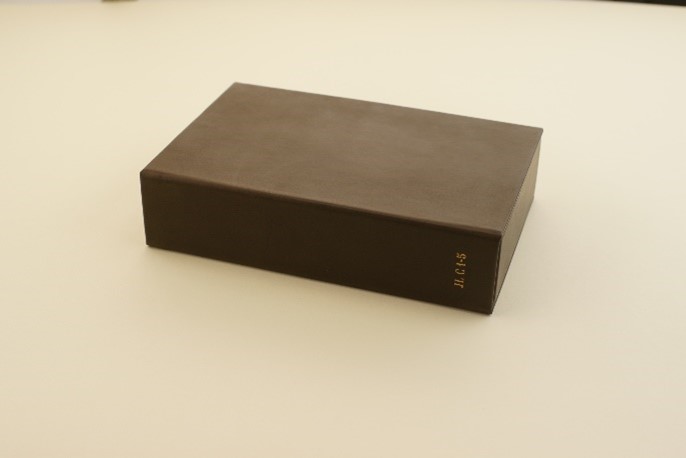
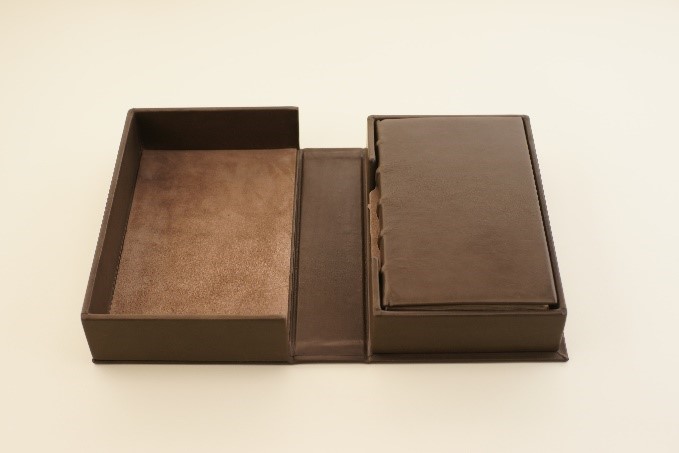
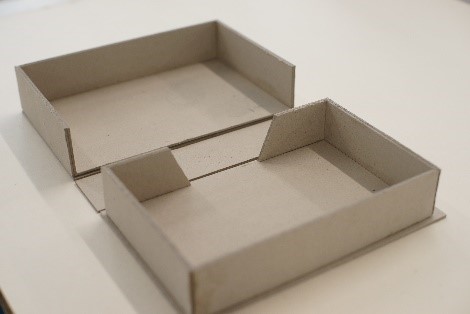
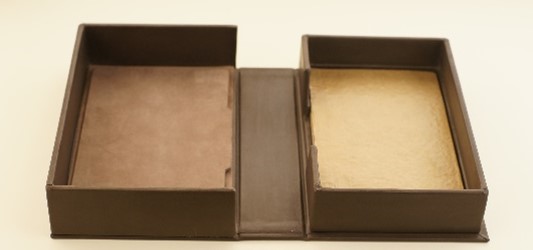
A custom conservation box with an attached lid was made with full-grain calfskin matching the binding. The interior was lined with turned-over leather, and a double bottom was added for the preservation of disbound parts.
The cardboard used is neutral and acid-free. They are assembled by gluing.
9/ Identification of the document
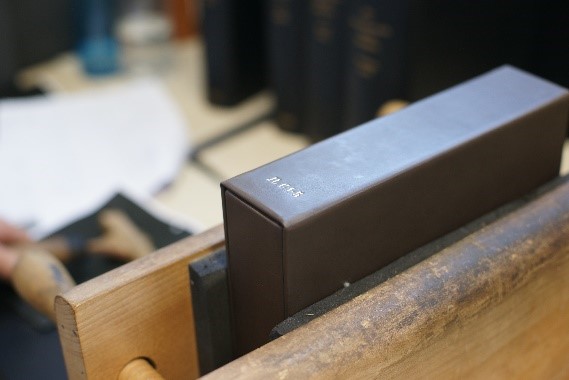
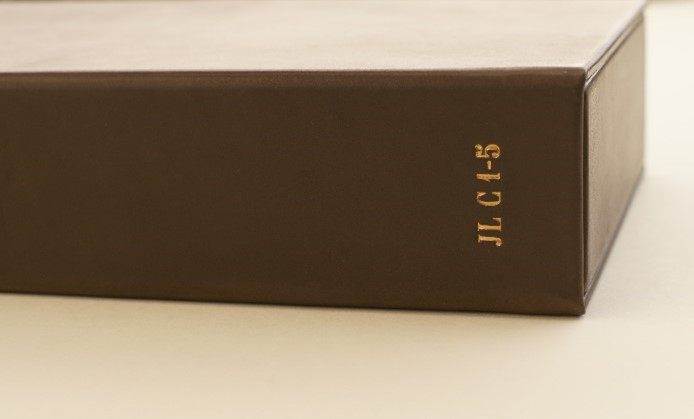
The classification number is directly gold tooled in the leather of the box in 22-carat real gold.
Final result
We would like to thank our restorers Gaëlle (restoration and binding of the book), Patricia (creation of the box), Jonathan (gold tooling with gold leaf) and Pascal (creation of the box), who have combined their expertise for the preservation and enhancement of this 15th century jewel.
We are proud of our crafspersons who hold in high regard the values that we demonstrate every day: to preserve and safeguard written heritage with diligence while respecting the history and essence of each piece.