
Lyon-style binding, a real shield against time
Although handcrafted binding of administrative documents issued by local authorities is now mandatory under Decree No. 2010-783 of July 8, 2010, it is in fact a much older and very common practice, as many archive services can attest. However, it is quite rare to find bindings as beautiful as that of the Council’s Register of Deliberations entrusted to us by Villeneuve Lez Avignon.
The binding, a real protection for the register
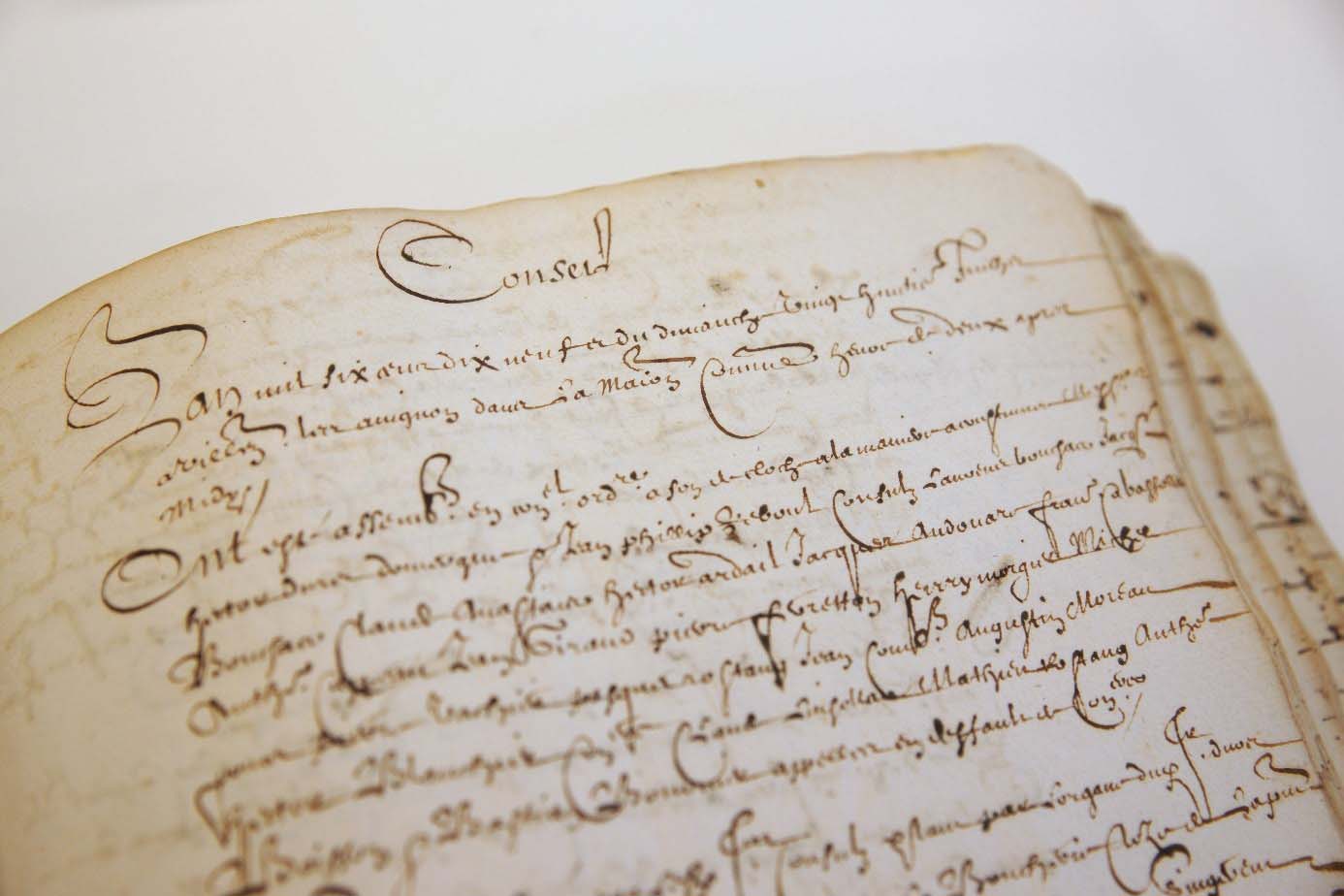
However, all of the pages have been carefully cleaned, flattened, and reinforced where necessary. The gaps in the paper have been filled-in with Japanese paper of a weight and color matching the original paper.
Then, a pamphlet stitch was used to bind the 12 signatures of the register together. This technique, which consists of sewing the sections of the register together without adding ribbons or strings (usually used to “bind” the bookblock to the cover), is identical to the original and allows a flexible cover to be attached.
The cover must first be restored before being reattached.
Lyon-style binding, leather strips decorated with gilding, passementerie…
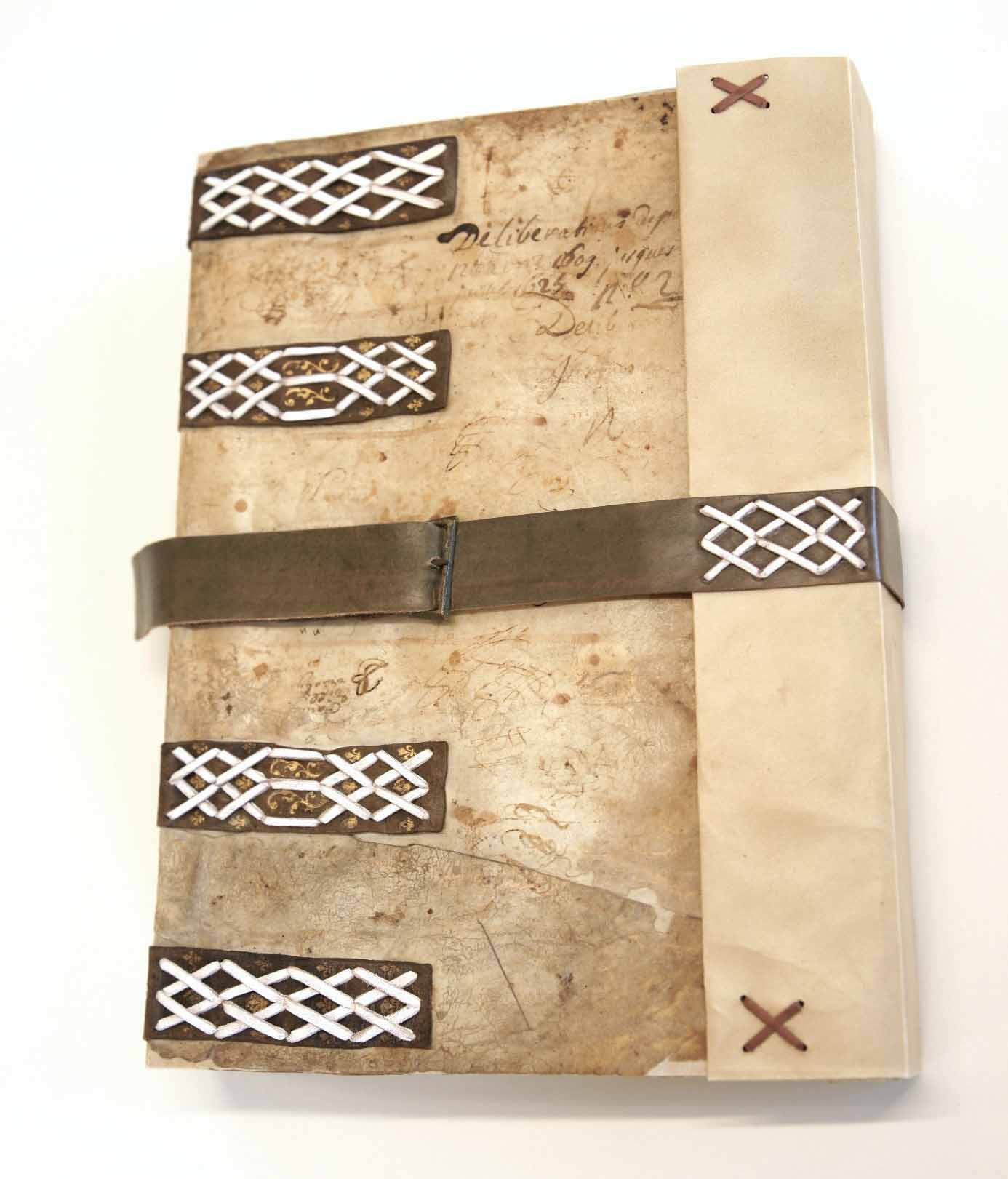
This register is distinguished by its Lyon-style binding (known as “reliure lyonnaise” in French) with its unique appearance, notably thanks to the leather strips that reinforce the flexible parchment cover.
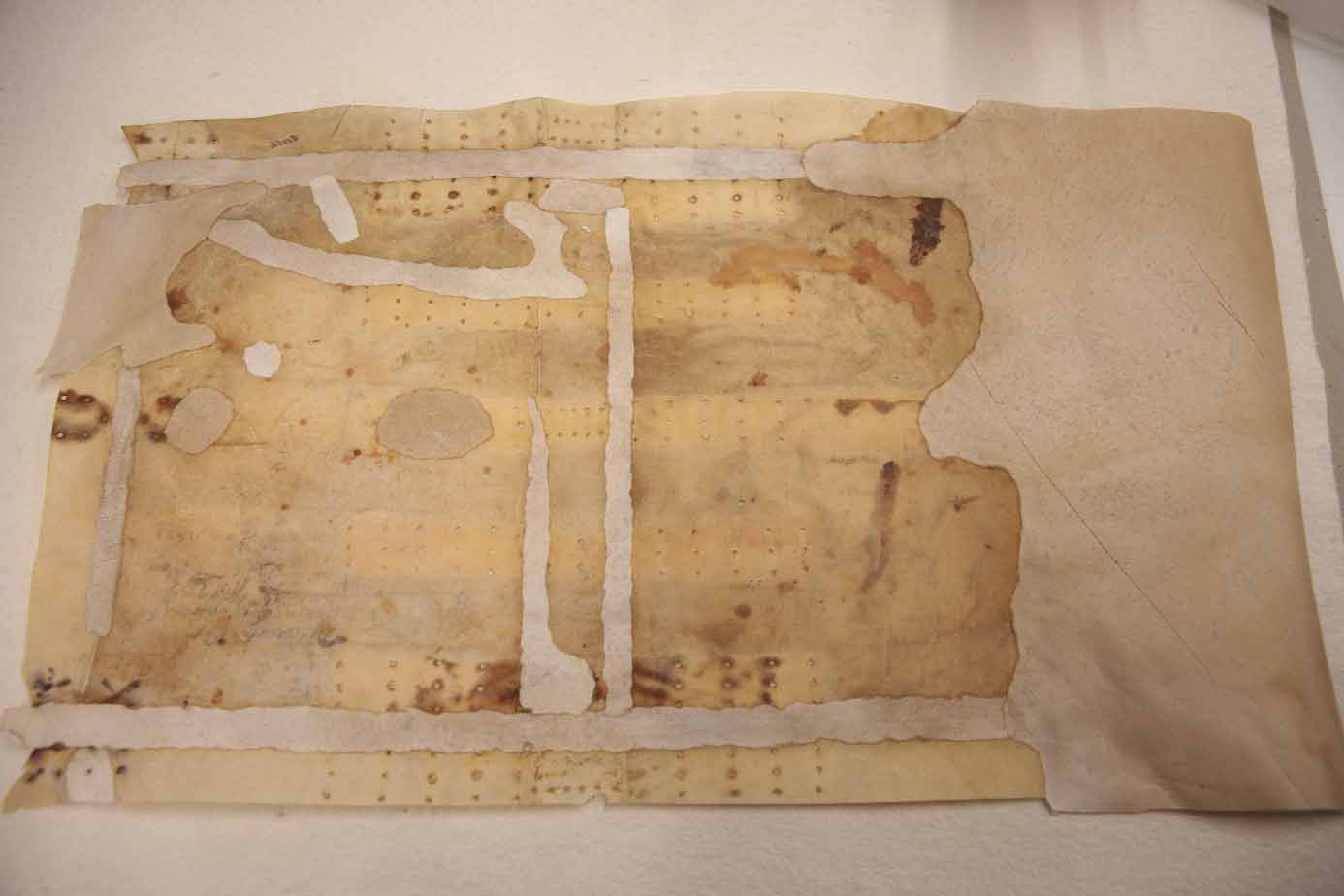
When it arrived at our workshop, it had a large tear on the front cover and numerous missing sections. The entire flap was also missing.
For proper treatment, the dismantled cover must be flattened: parchment, a living material, has moved and shrunk considerably over the years. The gaps are filled-in with parchment skin and the tears are reinforced on the inside so as to preserve the external appearance of the register. The flap is completely recreated in accordance with the aesthetic and historical significance of the register (in accordance with Article 5 of the E.C.C.O.* Code of Ethics). It should be noted that the restoration remains visible, as it is not intended to mimic the original.
Leather fastenings then allow the cover to retain its shape. These are located in the corners, but also at the spine: when the flap is open, a star appears on the front cover of the register.
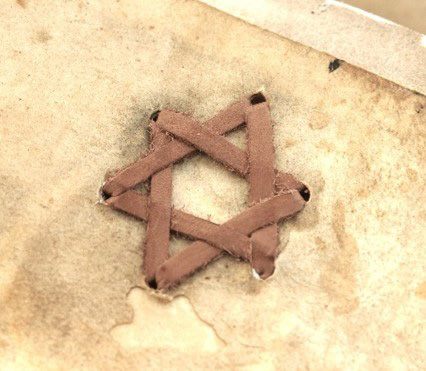
These fastenings, like the passementeries, are extremely worn and in some cases even broken. As they cannot be restored, they are kept separately (in accordance with Article 15 of the ECCO Code of Ethics*) and reproduced in an identical style using calfskin. Here, it is brown, while the passementeries (or “trimming”, decorative braiding using strips of leather) are white and adorn the five leather bands that decorate the binding. All are original: only the middle strap had to be restored by adding a dyed brown calfskin strip. It is discreetly attached to the corresponding band on the back and can thus be used to close the register with the metal buckle, which is also original.
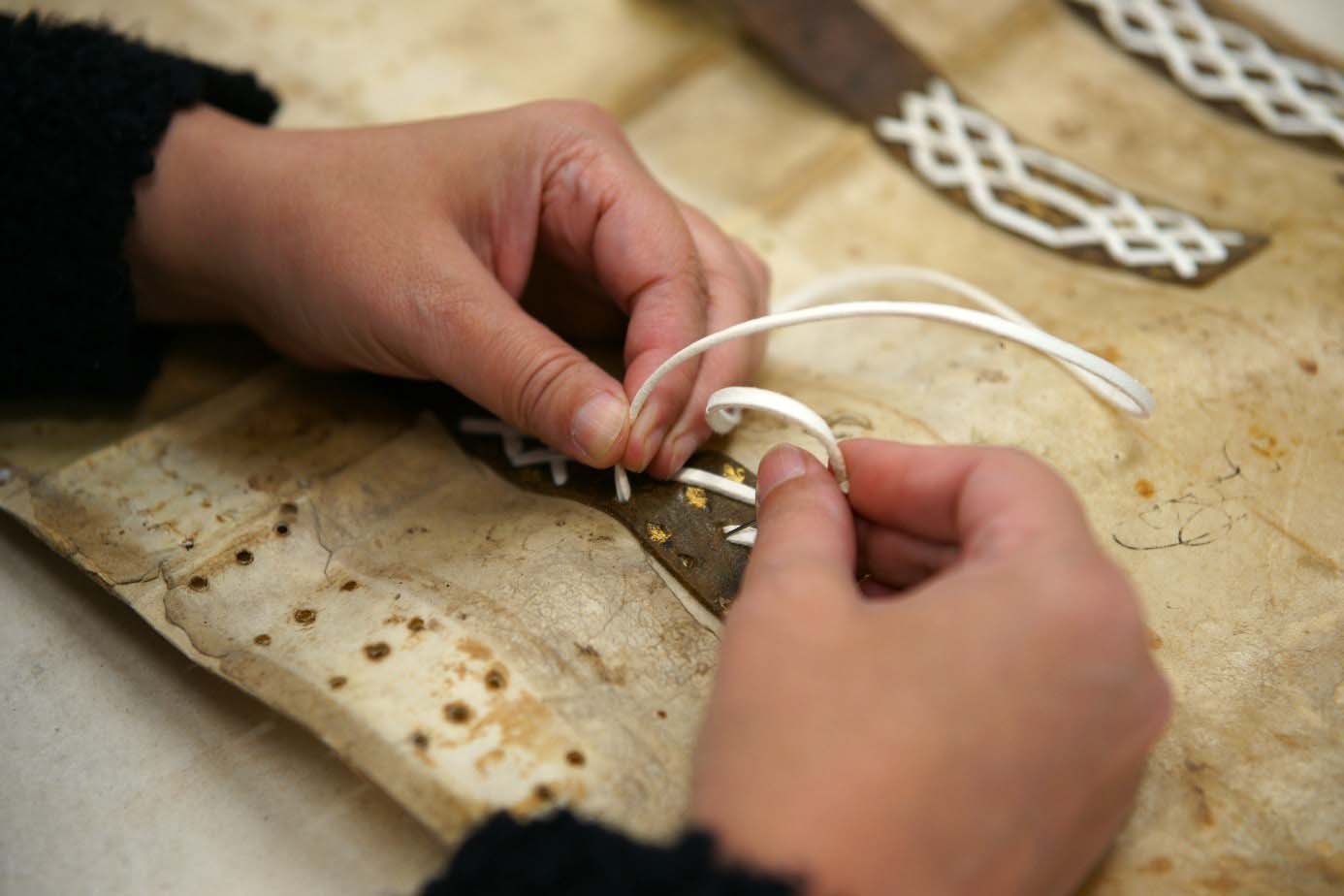
An unusual detail: gilded fleurs-de-lis have present between the trimmings and have stood the test of time perfectly.
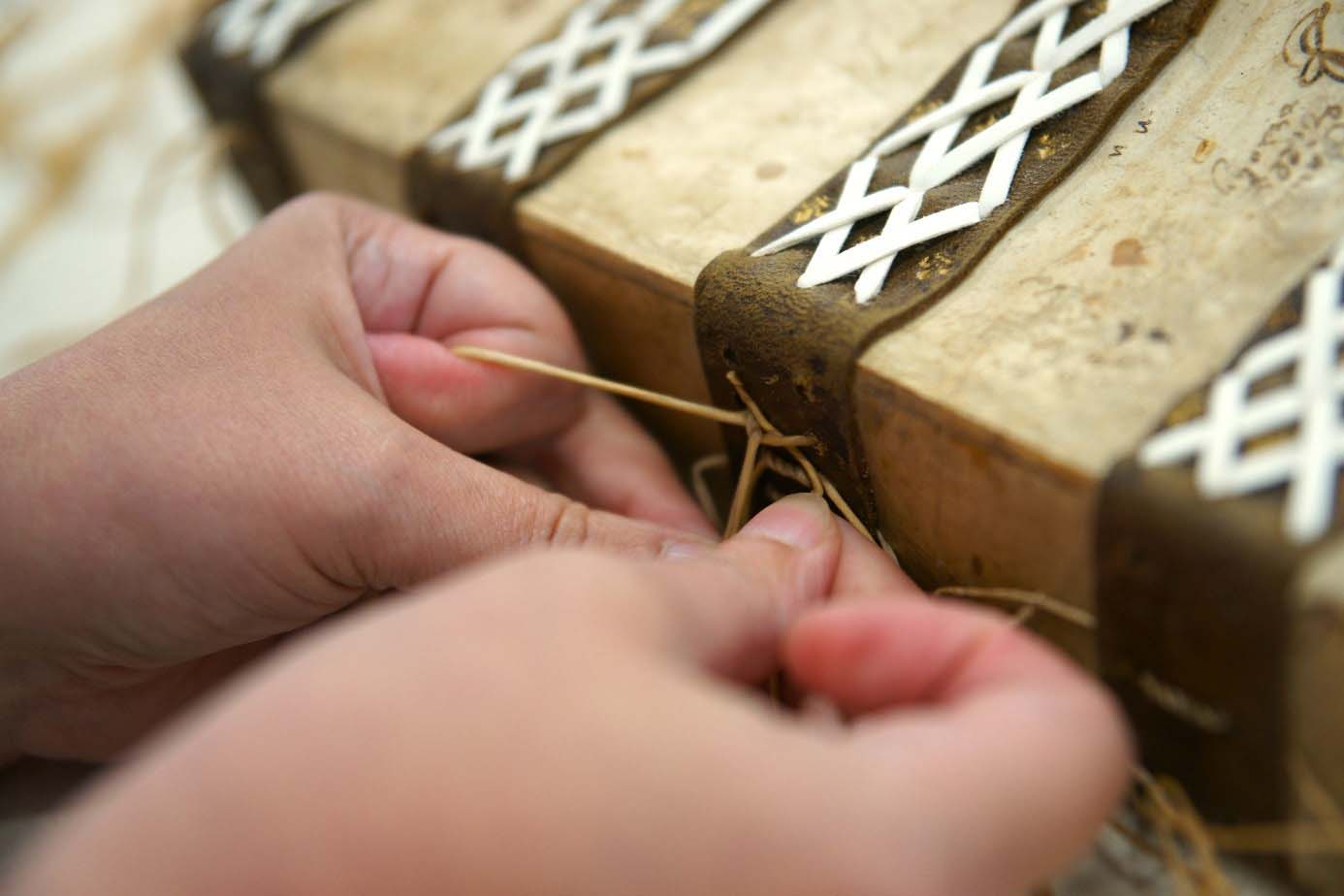
Once the cover has been completely restored, it is attached to the bookblock using twisted parchment ties, giving the book its former splendor and solidity.
This register has been restored not only in accordance with restoration standards, but also in the spirit of Lyon-style bookbinding: a flexible yet sturdy cover, held together solely by its seams and ties. Typical of the Dauphiné region and strongly influenced by Italian fashion, it is more commonly found in the south-east of France, where the register will return after its rejuvenation in our workshop from Corrèze.
Looking to have your collection or project restored? Contact La Reliure today to discuss your restoration needs.